
For founders · Apparel
How to find a cut and sew manufacturer in the USA
Show up with a tech pack, know if you're buying sewing or a finished garment, and approve a sample before anything goes into production.
In this article
The short answer
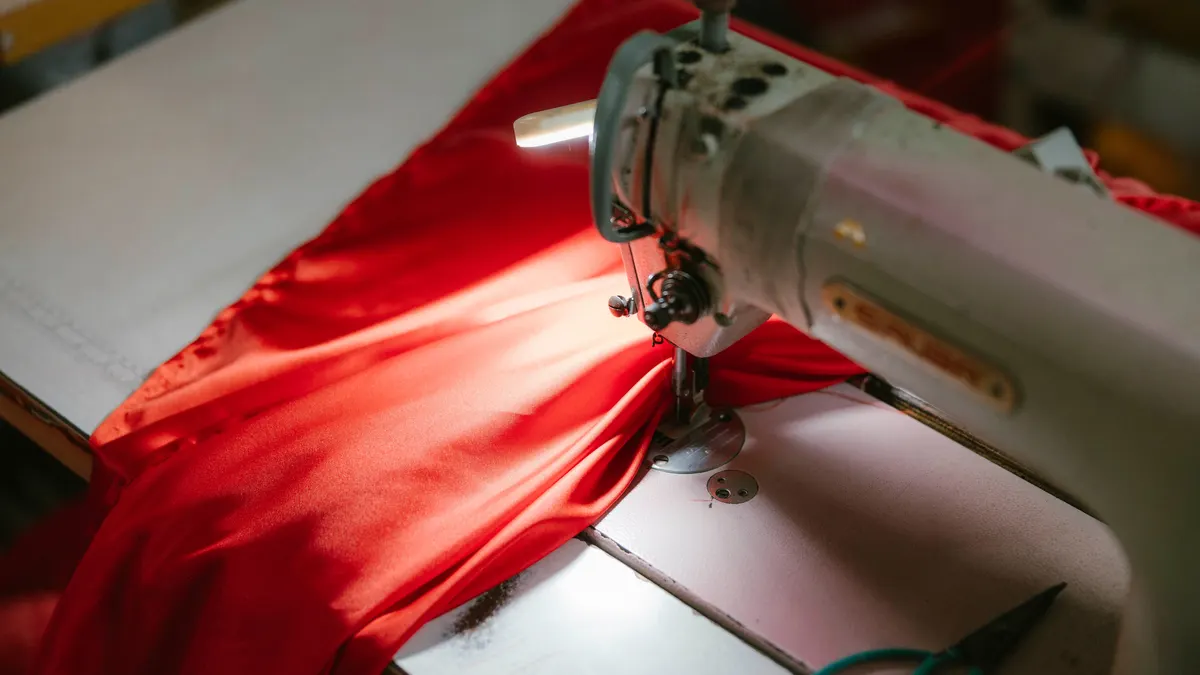
A cut and sew manufacturer turns fabric into finished garments. It cuts the pattern pieces, sews them and finishes them. To find one in the US, decide first whether you want CMT (cut, make, trim), where you supply the fabric and trims, or full package, where the manufacturer sources materials too. Then prepare a tech pack, which is the instruction sheet for your garment.
Contact manufacturers that already sew your kind of product, ask how their minimums are counted, pay for a sample, and only move to production once that sample is right.
Los Angeles, New York and North Carolina all have apparel and textile manufacturing, each with a different mix. The CFDA keeps a free Production Directory of US fashion manufacturers you can filter by location and minimum. On FirmsLedger you can browse garment manufacturing, sportswear and knitwear manufacturers.
Build a tech pack before you contact anyone
A tech pack tells the manufacturer exactly what to make. Without one, every quote is a guess and every sample is a surprise. It doesn't need to look fancy, but it does need to be complete.
A workable tech pack has flat sketches of the front and back. It has a measurement chart with each point of measure and the size you want sampled. It has a bill of materials listing fabric, thread, zippers, buttons, labels and trims. Add construction notes for seams, stitches and hems, artwork placement for prints or embroidery, and labeling and packing instructions. Include photos of garments you like, marked with what you'd change. If you already have a pattern, send it. If not, say so, because patternmaking is often a separate charge. Use one revision number across every file.
Practical takeaway: If you can't draw flats, pay a technical designer or patternmaker to build the tech pack. It costs less than a wrong sample.
Choose CMT or full package
CMT stands for cut, make, trim. You buy the fabric and trims and deliver them, and the manufacturer cuts and sews. With full package, the manufacturer sources the materials too and hands you finished garments.
CMT gives you control over fabric and usually a lower sewing price. But you take on sourcing, shipping fabric to the factory and the risk if it arrives short or flawed. Full package costs more per piece because the manufacturer does more work and carries the material cost. In return, one company answers for the result. Some manufacturers offer a mix, where they source fabric and you send your own branded labels and hangtags. Ask exactly what's included: patternmaking, grading, marker making, cutting, sewing, trims, labels, pressing, folding, bagging and shipping.
Practical takeaway: For your first collection, ask for full package quotes as well as CMT, and compare the total cost per finished piece.
Plan how the fabric gets bought
Fabric is usually the biggest material cost, and it can hold up the whole order if it arrives late. Mills and wholesalers have their own minimums, often per color. A custom color or print can mean buying far more than your first run uses.
Ask the manufacturer how much fabric each piece uses, called the yield, and how much extra to buy for cutting loss and samples. Order sample yardage first and make your sample in the same fabric you'll produce in. Ask whether the fabric should be washed or tested for shrinkage before cutting. If you're buying fabric under CMT, agree on who inspects it when it arrives and who pays if a roll is flawed. Get the fiber content from the mill or wholesaler in writing. You'll need it for your garment labels.
Practical takeaway: For a first run, pick fabric that's in stock at a wholesaler or already on the manufacturer's shelves.
Pay for a sample and fit it on a real body
Expect to pay for patterns and samples. Plan for more than one round. Fit each sample on a person who matches your base size, not on a hanger or a table.
Check fit against your measurement chart first. Then check construction: seams, stitch length, hems, how trims are attached and whether prints sit where you placed them. Wash the sample the way a customer would, then measure it again. Write feedback as specific changes with numbers, such as "raise the pocket 1 inch," not general comments. Ask for a pre-production sample in the real fabric and trims before the run starts. It's the last cheap chance to catch a problem before it's repeated across every piece.
Practical takeaway: Approve one final sample in writing, tag it, and have the manufacturer keep a matching one as the production standard.
Ask how minimums are counted per style, color and size
Cut and sew minimums are often counted per style and per color, with sizes spread inside them. A manufacturer with a 100-piece minimum per color may want 300 pieces for three colors of one style.
The CFDA Production Directory lets you filter US fashion manufacturers by production minimum, with ranges from a handful of samples up to 500 or more units (CFDA). That spread shows how much minimums vary between manufacturers. Sample rooms and small sewing shops are often set up for shorter runs than large factories. Ask whether the minimum is per style, per color or per order, and what a smaller run would cost per piece. On FirmsLedger, profiles with a low stated minimum show a "Takes small orders" badge, but most profiles don't list a minimum, so ask.
Practical takeaway: Launch with one or two colors in a core size range, and add more once something sells.
Get grading and size specs right
Grading is how your base pattern gets scaled up and down into each size. It's often charged apart from patternmaking. Poor grading gives you a medium that fits and an extra large that doesn't.
Your measurement chart should give every point of measure for every size, with a tolerance for each, such as plus or minus half an inch. Decide your size range up front. Each extra size adds grading work and spreads your minimum thinner. Ask who owns the patterns and graded files once you've paid for them, and whether you can take them to another manufacturer later. Get the answer in writing. A manufacturer that made your patterns may keep the files unless you agree otherwise.
Practical takeaway: Ask for a size set, one sample in each size, before production. Try on at least the smallest and largest.
Know the main US apparel regions
Three US regions with deep apparel and textile roots are Los Angeles, New York and North Carolina. Each has a different mix of sewing, sampling and fabric making. You don't have to be local, but visiting during sampling helps.
A 2016 LAist report described Los Angeles as having the largest cut and sew apparel base in the US (LAist). California requires every garment manufacturing business to register with the Labor Commissioner, and brands can be liable for wages a contractor owes (California DIR). In August 2025, New York City Council committees approved a Midtown South rezoning that the Council said came with over $120 million for Garment District fashion and garment businesses (NYC Council). North Carolina's Commerce department says the state has the largest textile mill industry in the US (NC Commerce). Textile mills make yarn and fabric, so it's a place to look for materials as well as sewing.
Practical takeaway: If you can, visit during sampling. A morning on the floor tells you more than a week of emails.
Vet the manufacturer and agree on terms
Before you pay a deposit, check that the company is real, sews in its own facility and has made garments like yours. Ask for photos or samples of past work and a customer reference you can call.
Ask whether sewing happens in house or goes to a subcontractor, and where. The CFDA says it doesn't audit or certify the manufacturers in its directory (CFDA), so a listing anywhere is a lead, not proof. For a California manufacturer, ask for its garment registration and check it in the Labor Commissioner's license search. Ask what deposit is due before production and when the balance is due, and don't pay in full before you approve a sample. Agree on what counts as a defect. Your labels need fiber content, country of origin and your company name or RN (FTC).
Practical takeaway: Put price, quantity, delivery date, sample approval, defect allowance and payment schedule in one signed document.
Frequently asked questions
What is a cut and sew manufacturer?
- A manufacturer that cuts fabric into pattern pieces and sews them into finished garments. Many also offer patternmaking, grading, sampling and finishing such as pressing, tagging and bagging.
What's the difference between CMT and full package?
- With CMT (cut, make, trim) you supply the fabric and trims and the manufacturer cuts and sews. With full package, the manufacturer also sources the materials and delivers finished garments. Full package costs more per piece but puts one company in charge of the result.
What is a tech pack?
- The instruction file for your garment. It usually includes flat sketches, a measurement chart, a bill of materials, construction notes, artwork placement and labeling details. Manufacturers use it to quote, sample and produce.
What's the minimum order for a cut and sew manufacturer?
- It varies widely. Many manufacturers count the minimum per style and per color, and small shops often accept shorter runs than large factories. Ask how the minimum is counted and what a smaller run would cost per piece.
Do I need my own patterns?
- No, but someone has to make them. Many cut and sew manufacturers offer patternmaking and grading for a fee. Ask who owns the patterns once you've paid, and get the files if you can.
Where are US cut and sew manufacturers?
- All over the country, with long-standing clusters in Los Angeles and New York. North Carolina has a large textile mill industry making yarn and fabric. A manufacturer's fit with your product matters more than its location.
What has to go on a clothing label in the US?
- The FTC says textile labels must show fiber content, country of origin, and the company name or RN number. A garment sewn in the US from imported fabric is labeled along the lines of "Made in U.S.A. of imported fabric." Care instructions fall under a separate FTC rule.
Sources
The pages this guide cites, in the order they appear.
- Production Directory · cfda.com
- LAist · laist.com
- California DIR · dir.ca.gov
- NYC Council · council.nyc.gov
- NC Commerce · commerce.nc.gov
- FTC · ftc.gov